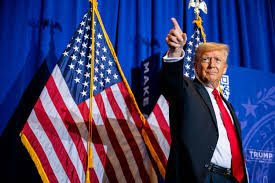
It's become the Question of the Day because Trump
may be considered, and is certainly called, a neo-fascist - that is, a fascist for our
times, not one out of the past.
One feature supporting that is Trump knows instinctively his whole appeal is to what are called 'the people', a formless grouping that may or
may not exist in reality, but which appears undeniable in
the face of the enormous anonymous numbers out there.
However that may be, Trump wins support by using every modern means of communication to promise that 'they', the faceless, undifferentiated masses, can only get what they want from him. That was fascism's project from the start and is what distinguishes fascism from democracy, which accepts variety and works on compromise. Fascism isn't a mendacious corruption of democracy, but a legacy from monarchy, when everyone was
an obedient subject of the king.
The
internet is a key instrument, but not the only one, to achieve Trump's end; he has above all the prestige of being POTUS with the automatic universal attention
that commands. In the role, he sees himself as Leader, akin to a dictator rather than to a king: self-made and answerable to none; fearless, infallible, even touched with Divinity. But still one of us.
What could upset this claim to power is the world has moved on from one hundred years ago. Democracy has taken root and can avail itself of the weapons Trump depends on. He has potent ways to persuade, but oppositions have their own means as long as they use them.
The question now isn't so much whether fascism's manipulable masses exist (and for that matter Marxism's intractable classes): it is whether the mass of voters have changed since Hitler and Stalin were able to force their infamous politics on the world.
Are We the people still ready to back politicians who thrive on bragging that the solution is no problem? Or has the lesson got home that when a politician makes that easy promise, both the problem and the solution are suddenly the people's?